 NEWS
NEWS
TURKMENISTAN’S HERITAGE AND THE INTERNATIONAL DAY FOR MONUMENTS AND SITES
In 1983, at the initiative of the Assembly of the International Council on Monuments and Sites (ICOMOS), a global holiday was established — the International Day for Monuments and Sites (World Heritage Day), which is celebrated annually on April 18.
This date is held in special esteem in Turkmenistan. The Turkmen people carefully preserve their historical and cultural heritage, which dates back to ancient times.
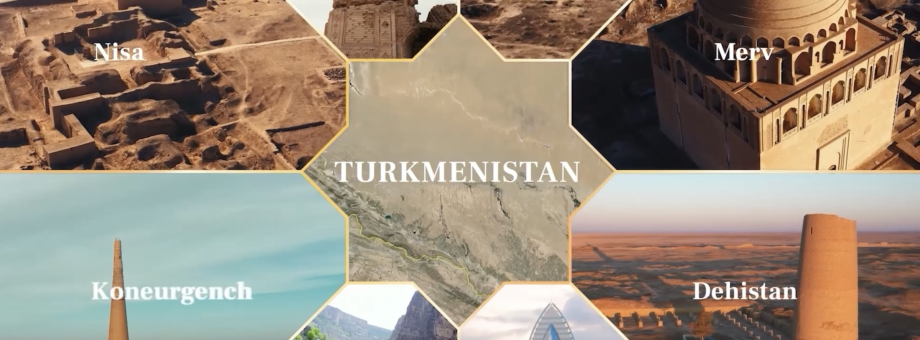
Turkmenistan, located at the heart of the Great Silk Road, is one of the ancient cradles of world civilization. Currently, the country boasts hundreds of historical and cultural sites listed on the state register, many of which are archaeological sites. For example, Gonurdepe, Garadepe, Namazga-Depe, Altyn-Depe, Jeitun and Anau, Old Nisa, Ancient Merv, Kunyaurgench, Ancient Dehistan, Ancient Sarakhs, Abiverd, and the Geoktepe Fortress are outstanding architectural structures of bygone eras and constitute magnificent open-air museums. All of them have been declared state historical and cultural reserves. The unique monuments of Ancient Merv, Kunyaurgench, and Nisa, considered sites of universal significance, have been inscribed on the UNESCO World Heritage List.
Ancient Merv is one of the oldest and best-preserved oasis cities along the Silk Road. Its territory contains unique fortresses dating back to different eras, varying in size and state of preservation: Erk-Kala (6th century BC), Gyaur-Kala (3rd century), Kyz-Kala (6th century), Sultan-Kala (11th century), Abdulla Khan-Kala (15th century), and Bayramali Khan-Kala (presumably 18th century).
In close cooperation with UNESCO, Turkmenistan continues to actively implement projects to document, study, preserve, and promote its historical, cultural, and natural monuments, passing this priceless heritage on to future generations.